Alexander Rivera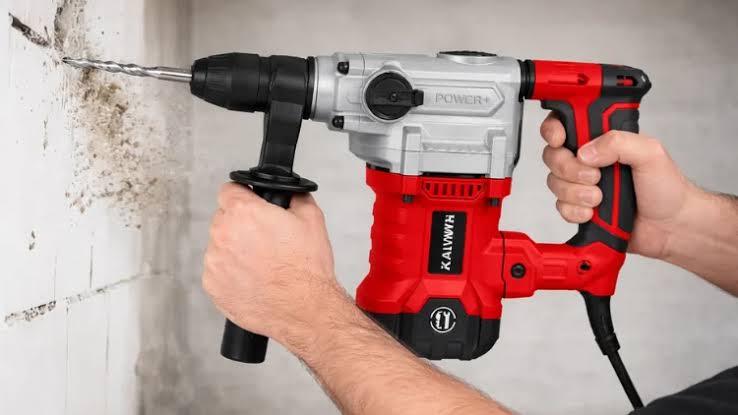
Drilling through concrete, breaking out masonry, or setting anchors into structural elements places demands on a tool that most general-purpose drills simply cannot meet. SDS drills carry this design one step further. The slotted drive chuck allows the bit to move axially during each hammer stroke, ensuring that impact energy is transferred directly to the material rather than being partially absorbed by the clamping mechanism. The efficiency difference this creates is significant in practice.
The rotary hammer category exists precisely to address these requirements, and within it, the SDS system has become the standard that professional tradespeople and construction teams rely on. Making the right selection from this category requires understanding not just the headline specifications, but the practical considerations that determine how well a tool performs when conditions are demanding.
The Technical Foundation: How Rotary Hammer Drills Work
To understand why rotary hammer drills are the correct tool for hard materials, it helps to understand what happens at the point of contact between the bit and the material.
Concrete is a composite material—aggregates of hard particles bound together with cement. Penetrating it effectively requires fracturing those aggregate particles through direct impact, not simply grinding through them with rotational force. Standard drills are not equipped to deliver that kind of impact. Rotary hammer drills are built around it.
The pneumatic or electro-mechanical hammering mechanism in a rotary hammer generates high-frequency impact pulses independently of the rotation. The bit strikes the concrete surface, fractures the material ahead of it, and the rotational motion clears the debris through the bit’s fluting. This cycle happens rapidly and repeatedly, making the tool dramatically faster through hard materials than any purely rotary alternative.
Selecting the Right SDS Format for Your Application
SDS-Plus: The Professional Standard for General Masonry Work
SDS-Plus tools represent the broadest segment of the professional rotary hammer market. They handle the full range of tasks that arise regularly in construction: drilling through brick, block, and standard concrete for anchors, fixings, and service penetrations; light chiseling work on tiles or plaster; and general masonry tasks across residential and commercial environments.
Tools in the SDS-Plus format are compact, well-balanced, and manageable across a variety of working positions. For professionals who need a reliable, versatile rotary hammer that adapts to the demands of a typical working week, SDS-Plus consistently delivers.
SDS-Max: Purpose-Built for Demanding Structural Work
SDS-Max tools serve a different and more specialized market. Their wider shank format allows a substantially higher level of impact energy to be directed into the material, making them the appropriate choice for heavily reinforced concrete, thick structural slabs, large-diameter core drilling, and heavy chiseling and demolition work.
Civil contractors, structural engineers on-site, and professionals working on infrastructure or large-scale commercial projects will find SDS-Max performance necessary for the materials they regularly encounter. The machines are heavier and require deliberate management during use, but for these applications, there is no practical alternative.
What the Specifications Actually Mean in Practice
Impact Energy
Impact energy is measured in joules and represents the force of each individual hammer stroke. A higher figure means harder striking, which translates directly to faster penetration through dense material and longer useful life for drilling accessories. When comparing tools within the same format category, impact energy is the most useful performance indicator for heavy-duty applications.
For light to medium masonry work, a lower impact energy rating is adequate and often preferable because it affords more control. For structural concrete or natural stone, prioritizing higher impact energy is the correct approach.
No-Load Speed and Variable Control
Rotation speed affects how efficiently the bit clears material from the hole between impacts. Variable speed control allows the operator to reduce speed for initial bit placement—preventing the bit from skating across a smooth surface before the drill point is established—then accelerate once the hole is started. This control is particularly valuable when drilling near material edges or in locations where precision is critical.
Operating Mode Flexibility
The most useful rotary hammers offer three operating modes: rotation only for standard drilling into softer materials, rotation plus hammer for concrete and masonry, and hammer only for chiseling tasks. This last mode transforms the tool into a light demolition instrument when fitted with a flat or pointed chisel, enabling tile removal, surface preparation, and light breaking work. A tool that covers all three modes efficiently serves a wider range of job site needs from a single platform.
Vibration, Comfort, and Long-Term Operator Health
Vibration is an inherent byproduct of the hammering mechanism in a rotary hammer drill, and its effects on the operator deserve serious consideration. Sustained daily exposure to hand-arm vibration contributes to a progressive condition affecting grip strength and sensation—a genuine occupational risk in trades where rotary hammer use is routine.
Modern professional-grade tools address this through active vibration reduction systems incorporated into the tool’s handle and body design. These systems work by mechanically decoupling the handle from the main body during the hammer cycle, absorbing the vibration before it reaches the operator’s hands. The effect is measurable both in comfort during use and in reduced cumulative exposure over time.
Specifying a tool with effective vibration damping is a professional decision with long-term consequences, not simply a comfort preference.
Corded vs. Cordless: Practical Guidance for Real Job Sites
Sustained Performance from Corded Platforms
A corded rotary hammer maintains consistent power output regardless of how long it operates or how many holes it drills in succession. For high-volume tasks in locations with reliable power access, this consistency is a meaningful operational advantage. There are no energy curves, no battery warm-up cycles, and no decisions about how to sequence work around battery availability.
Cordless Platforms and Their Genuine Advantages
Battery technology has advanced to the point where professional cordless rotary hammer platforms deliver sustained performance across demanding tasks. The operational advantages are real: freedom of movement across large sites, practical use in locations without power access, and elimination of cable management as a safety and logistics concern.
The best cordless rotary hammers integrate with wider battery ecosystems, allowing the same battery platform to power multiple tools across a professional’s kit. For tradespeople who already invest in a quality battery system, adding a cordless rotary hammer strengthens the overall toolkit without multiplying battery types.
Building a Decision Based on Application, Not Assumption
The right SDS rotary hammer is the one matched to the work it will actually perform. Defining the hardest material, the largest hole diameter, the typical daily duration of use, and the working environment before evaluating specifications produces a much clearer picture of what the tool needs to deliver.
From that starting point, format selection, impact energy range, power source, and feature priorities all fall into place logically. The result is a tool that performs consistently from day one, supports efficient working practices, and holds its value through years of professional application.