Alexander Rivera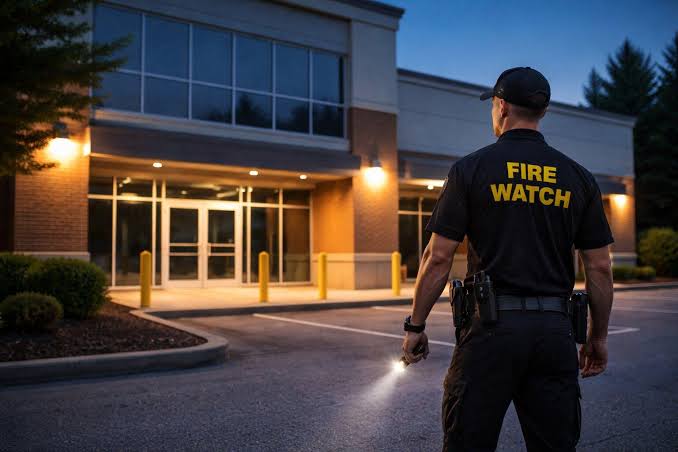
Fire safety regulations exist for a reason—and the numbers behind them are hard to ignore. Each year, the U.S. Fire Administration documents over 100,000 non-residential structure fires, resulting in billions of dollars in losses and hundreds of preventable fatalities. When automatic detection and suppression systems go offline, even temporarily, the absence of a human safety presence dramatically increases risk. Contractors, facility managers, and building owners searching for fire watch guards near me are already ahead of the curve—but understanding exactly what’s at stake can sharpen the urgency further.
What Happens When Fire Systems Go Offline?
Automatic sprinkler and alarm systems require routine maintenance, repairs, and inspections. During these windows, a property operates without its core fire protection infrastructure. Depending on local codes and the nature of the outage, a fire watch may be legally required within minutes of a system going offline.
NFPA 25 sets the standard for the inspection, testing, and maintenance of water-based fire protection systems. When an impairment occurs—whether planned or unplanned—building owners must either restore the system immediately or implement a fire watch. Failure to do so can result in citations, permit suspension, and significant liability if a fire occurs during the impairment period.
The Financial Exposure Is Significant
Consider the numbers. According to the National Fire Protection Association, the average property loss per non-residential fire exceeds $130,000. For large commercial facilities, losses can climb into the millions when business interruption, equipment replacement, and legal costs are factored in.
A single eight-hour fire watch shift, by contrast, typically costs between $160 and $480. The math is straightforward—professional oversight during system outages represents one of the most cost-effective risk management decisions a property owner can make.
Legal Obligations That Cannot Be Overlooked
Many building owners are unaware that fire watch requirements are codified in law, not just industry best practice. Local fire marshals have the authority to inspect properties and issue stop-work orders if mandated fire watch protocols aren’t in place.
The International Fire Code (IFC), adopted in some form by most U.S. states, specifies that a fire watch must be established immediately upon discovery of a fire protection system impairment. Guards must conduct patrols at defined intervals and maintain written logs that document their activity. These records may be requested during inspections or in the event of a loss investigation.
Hot Work: A Specific and Frequently Overlooked Risk
Beyond system outages, hot work is one of the most common triggers for mandatory fire watch deployment. Welding, torch cutting, grinding, and soldering all generate sparks capable of igniting surrounding materials—often in areas where those materials aren’t immediately visible.
OSHA 29 CFR 1926.352 requires that a fire watch remain on-site during hot work and for at least 30 minutes after work concludes. Some jurisdictions extend that window to 60 minutes. The reasoning is straightforward: smoldering fires can develop slowly, showing no visible signs until minutes or hours after the ignition source is removed.
What Separates a Qualified Fire Watch Guard from a Standard Security Guard?
The distinction matters enormously. A trained fire watch professional is specifically equipped to identify fire hazards, conduct systematic patrols, maintain accurate documentation, and respond appropriately when smoke or fire is detected.
Key qualifications to verify before hiring include:
State-recognized fire watch certification
Familiarity with NFPA and local fire code requirements
Active CPR and first aid credentials
Hands-on fire extinguisher training
Experience with patrol log documentation that satisfies fire marshal standards
Ask potential providers whether their guards receive ongoing training or only initial certification. The best companies invest continuously in their personnel.
Taking the Right Step at the Right Time
The gap between a system failure and a fully operational fire watch should be measured in minutes, not hours. Delays in coverage create the exact window in which preventable fires become devastating ones. Selecting a certified, responsive fire watch provider—and knowing who to call before an emergency arises—is one of the simplest and most impactful decisions a property owner can make.